Table of Contents
ToggleChoosing the right tile for your shower isn’t just about aesthetics, it’s a practical decision that affects durability, maintenance, and how your space functions day-to-day. Whether you’re gutting the bathroom or refreshing a tired shower surround, the tile you select sets the tone for the entire room. From timeless subway patterns to bold geometric designs and natural stone options, there are countless directions to take your project. This guide walks you through the most popular shower tile ideas trending in 2026, what makes each approach work, and how to pick materials that fit both your vision and your budget.
Key Takeaways
- Shower tile selection impacts both aesthetics and functionality, with classic subway tile remaining a versatile, affordable option at $3–8 per square foot installed, while requiring proper ventilation and grout sealing to prevent mold buildup.
- Geometric patterns and natural stone tiles make bold design statements but work best as feature walls on a single wall—mixing them strategically with neutral tiles keeps costs manageable and prevents visual overload.
- Natural stone like marble, slate, and travertine require regular sealing and careful maintenance; porcelain tile offers marble’s look without the upkeep, making it a practical alternative for shower walls.
- Proper waterproofing with cement board or liquid membranes before tiling is essential to prevent water damage and mold, costing $1–2 per square foot but saving thousands in structural repairs later.
- Mosaic and mixed-material combinations allow creative expression while keeping budgets reasonable when confined to accent areas, though installation labor runs higher at $10–15 per square foot.
Classic Subway Tile: A Timeless Bathroom Staple
Subway tile remains the go-to choice for homeowners and contractors alike. These 3″ × 6″ rectangular tiles create a clean, linear aesthetic that works in virtually any style, from farmhouse to modern minimalist. The standard running bond pattern (offset rows, like brickwork) is forgiving to install and hides minor misalignments well.
The beauty of subway tile lies in its versatility. White glazed subway is a safe, bright option that enlarges small bathrooms visually. Darker varieties like charcoal or sage green add sophistication without overwhelming the space. Textured or beveled edges introduce subtle visual interest without the maintenance headaches of heavily patterned designs.
When shopping, pay attention to the glaze. Glossy finishes reflect light and are easier to clean, but they’re slippery underfoot, not ideal for shower floors. Matte finishes offer better grip and a contemporary feel, though they require slightly more attention during cleaning. Expect glazed ceramic subway tile to run $3–8 per square foot installed, depending on your region and whether you’re hiring a pro or DIYing it.
One practical tip: subway tile’s narrow grout lines (typically 1/16″ to 1/8″) mean mold and mildew can settle in if ventilation is poor. Make sure your bathroom has solid exhaust fan coverage to keep humidity in check. If you’re concerned about maintenance, consider grout sealer, apply it after the grout cures (usually 72 hours) to protect against water absorption.
Modern Geometric Patterns: Bold Designs for Impact
If you want your shower to make a statement, geometric patterns deliver impact without screaming “trendy.” Hexagon, chevron, and large-format rectangular tiles in mixed colors or contrasting finishes create movement and personality.
Hexagonal tiles work particularly well on shower walls because they feel contemporary yet aren’t dated-looking. A mix of white and light gray hexagons, for instance, adds depth without overwhelming a small bathroom. Chevron patterns (V-shaped zigzags) demand more precision during layout but reward you with a dynamic, almost three-dimensional effect.
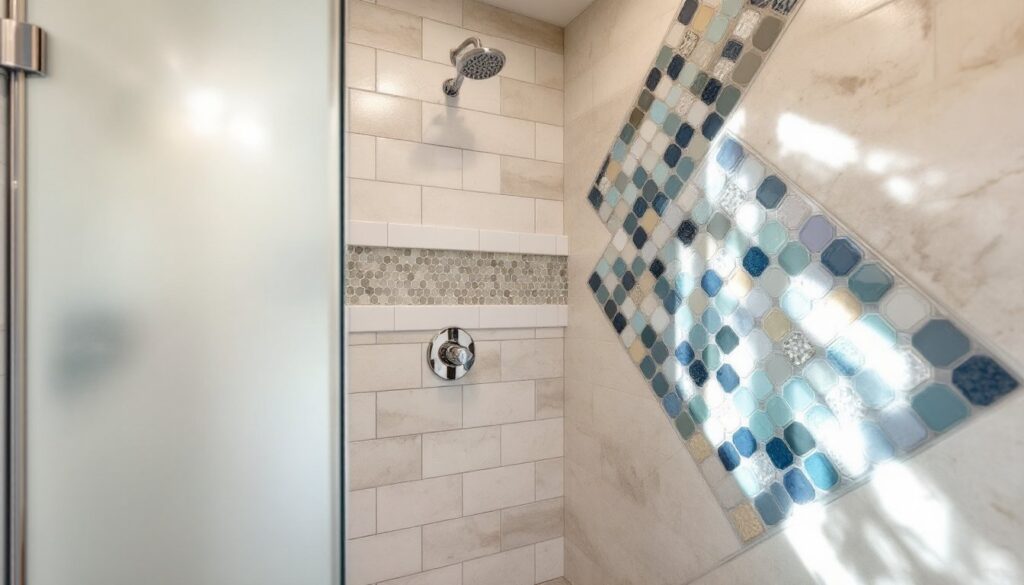
The key to pulling off bold geometry is restraint. Reserve patterned tiles for feature walls, say, the wall behind the showerhead, and keep the remaining three sides neutral. This approach prevents visual chaos and keeps installation costs manageable. A single feature wall of geometric tile might add $200–400 to your project budget compared to standard subway.
Geometric patterns also pair naturally with research house and interior design inspiration. Browsing interior design ideas can help you visualize how bold patterns work in real bathrooms before committing. One practical consideration: larger format tiles (like 8″ × 10″ or bigger) require a flatter substrate. Any dips or high spots in your wall studs will telegraph through the tile, creating visible gaps or lippage (uneven grout lines). Budget extra time for wall prep if you’re using large-format tiles.
Natural Stone Tiles: Bringing Spa-Like Elegance Indoors
Natural stone, slate, marble, limestone, travertine, elevates a shower from functional to luxurious. These materials feel substantial and warm underfoot, creating that high-end spa atmosphere.
Marble tiles are stunning but demand honesty: they stain easily, etch when exposed to acidic cleaners, and require sealing every 1–3 years depending on usage. If you love the look but worry about upkeep, consider marble-look porcelain instead. Modern porcelain can mimic marble’s veining and warmth while delivering the durability of ceramic, no sealing required.
Slate and travertine offer more forgiving maintenance. Slate’s naturally cleft surface provides excellent slip resistance, making it safer for shower floors. Travertine is porous and requires sealing, but it’s more stain-resistant than marble and develops a beautiful patina over time.
Natural stone typically runs $8–20+ per square foot before installation, so reserve it for accent walls or niches rather than covering the entire shower surround. A practical workaround: use natural stone for feature areas and pair it with less expensive tile elsewhere. For example, a travertine accent band at waist height flanked by neutral ceramic tile looks custom and costs considerably less than full coverage.
One essential point: most natural stone shouldn’t go on shower floors due to water absorption and slip hazards. Use it on walls, niche surrounds, or shelving. If you’re set on stone flooring, sealed slate or brushed limestone with a textured finish is your safest bet. Always apply a quality sealer (follow manufacturer recommendations, typically every 1–2 years) to protect porous stone from water damage and mildew.
Mosaic and Mixed-Material Combinations: Creative Expression
Mosaic tiles, small pieces in patterns, often hand-arranged, let you express creativity while keeping costs down. You can commission custom designs or work with pre-made sheets that simplify installation.
Glass mosaic tiles add sparkle and come in jewel tones or neutrals. Ceramic mosaics are budget-friendly and durable. Stone mosaics blend elegance with that handcrafted feel. Mixing materials, for instance, pairing glass and stone in a single pattern, creates visual richness without feeling chaotic.
The labor involved in mosaic installation is higher because individual small tiles (typically 1″ × 1″ or smaller) require more grouting and precision. Expect to pay $10–15 per square foot installed for custom mosaic work, or less if you’re DIYing pre-assembled mosaic sheets.
Mixed-material combinations work beautifully on accent walls. Imagine a wall featuring larger subway tiles interrupted by bands of mosaic: the contrast keeps the eye engaged. You can also layer materials by texture, rough slate adjacent to smooth glass, for instance, creating subtle sensory variety.
Neutral Color Palettes vs. Bold Accent Walls
When combining materials, your color strategy matters. Neutral palettes (whites, grays, soft beiges) create visual calm and make small bathrooms feel larger. They’re also easier to live with long-term: trends shift, but whites and grays remain timeless.
Bold accent walls inject personality. A deep blue or forest green mosaic focal point behind the showerhead draws the eye and makes the space feel intentional. The trick: keep accent walls to one wall maximum in a small bathroom, and ensure your background tiles are neutral enough to let the accent shine.
When designing, spend time with design inspiration on interior design platforms to see how color and material combos look in finished bathrooms under different lighting. Your phone’s photos won’t capture the same feel as seeing real installations.
Budget-Friendly Tile Selection and Installation Tips
You don’t need to spend a fortune to achieve a beautiful shower. Smart material choices and DIY installation (if you’re comfortable) can cut costs significantly.
Ceramic over porcelain: Glazed ceramic tile costs $1–4 per square foot, while porcelain runs $3–8. For shower walls (not floors), ceramic performs well and saves money. Porcelain is better for floors and wet areas due to lower water absorption.
Stick with standard sizes: Subway tiles (3″ × 6″) and larger rectangles (6″ × 12″) are cheaper than custom sizes or tiny mosaics because production is high-volume. Installation is faster, too, which reduces labor if you’re hiring.
DIY installation: If you have basic tile experience, handling the walls yourself while hiring a pro for corners, niches, and waterproofing prep can halve labor costs. Budget extra time, rushing tile work leads to lippage, voided warranties, and rework.
Waterproofing first: This isn’t optional. Install cement board or a liquid waterproofing membrane before tiling. A failed waterproof barrier means water reaches the studs, causing mold and structural damage. This upfront cost (roughly $1–2 per square foot) prevents costly water damage later. Research shower product options from curated collections to find quality fixtures that pair well with your tile selection.
Avoid ultra-trendy patterns on main walls: Geometric patterns and bold colors date faster than neutrals. Reserve trend-forward choices for small feature areas where updates are cheaper.
Conclusion
Your shower tile choice shapes how your bathroom looks and functions for years. Whether you go classic subway, bold geometric, luxurious stone, or creative mosaic, prioritize quality materials, proper waterproofing, and honest assessment of your skill level. Start by identifying which style resonates with you, then build your budget around durability and maintenance reality. The best tile is one you’ll still love five years from now.