Table of Contents
ToggleYour front yard is the first thing visitors, and potential buyers, see when they pull up to your home. A well-maintained, visually appealing entrance doesn’t just make you proud: it signals that the whole property is cared for. The good news is that curb appeal doesn’t require a major renovation or deep pockets. Strategic landscaping, smart lighting, and thoughtful details can transform your front facade in a weekend or two. This guide walks through seven practical front yard curb appeal ideas that any homeowner can tackle, from refreshing plants and pathways to upgrading your entry door and finishing touches.
Key Takeaways
- Front yard curb appeal ideas don’t require expensive renovations—strategic landscaping, fresh paint, and clean maintenance can transform your entrance in a weekend or two.
- Plant with purpose by choosing climate-appropriate plants, layering different heights and bloom times, and limiting color combinations to 2–3 colors plus green for a polished look.
- Your front door is the focal point of curb appeal; painting it a classic color like navy or forest green, upgrading hardware, and framing it with fresh trim delivers maximum impact for minimal cost.
- Strategic outdoor lighting, including uplighting on landscape features and motion-sensor floodlights, enhances curb appeal at night while improving security and using energy-efficient LED bulbs.
- Define pathways with pavers or stepping stones and maintain crisp bed edges to create a finished, intentional appearance that prevents your yard from looking neglected.
- Regular maintenance—pressure washing, sharp pruning, prompt weeding, and seasonal container rotations—is the unsung hero that keeps all curb appeal projects looking fresh and inviting.
Add Fresh Color With Strategic Landscaping
The easiest way to inject instant life into a front yard is through color. Plants don’t just fill space, they draw the eye and soften hard lines of your home’s exterior.
Choose plants suited to your climate and light conditions. A flowering shrub struggling in full shade won’t thrive no matter how much effort you put in. Before buying anything, walk your front yard at different times of day to map sun and shade patterns. Check your USDA hardiness zone and local growing guides, resources like The Spruce offer plant selection filters by region.
Layer heights and bloom times for year-round interest. Plant tall shrubs at the back or corners, mid-height perennials in the middle, and ground covers or shorter annuals up front. Stagger blooms so something flowers spring through fall. Mix evergreens (boxwood, holly, yew) with deciduous shrubs for winter structure.
Go bold with color combinations. Pair deep greens with silver foliage plants like dusty miller. Plant coral or orange flowers against burgundy leafed shrubs. Avoid a hodgepodge by limiting yourself to two or three colors plus green.
Remove dead branches, fallen leaves, and any plants that have outgrown their space. A single sickly shrub drags down an otherwise solid landscape. Replace it rather than leaving it limping along. Mulch beds with 2 to 3 inches of hardwood mulch to suppress weeds, retain moisture, and frame plantings crisply.
Upgrade Your Entryway With a Welcoming Front Door
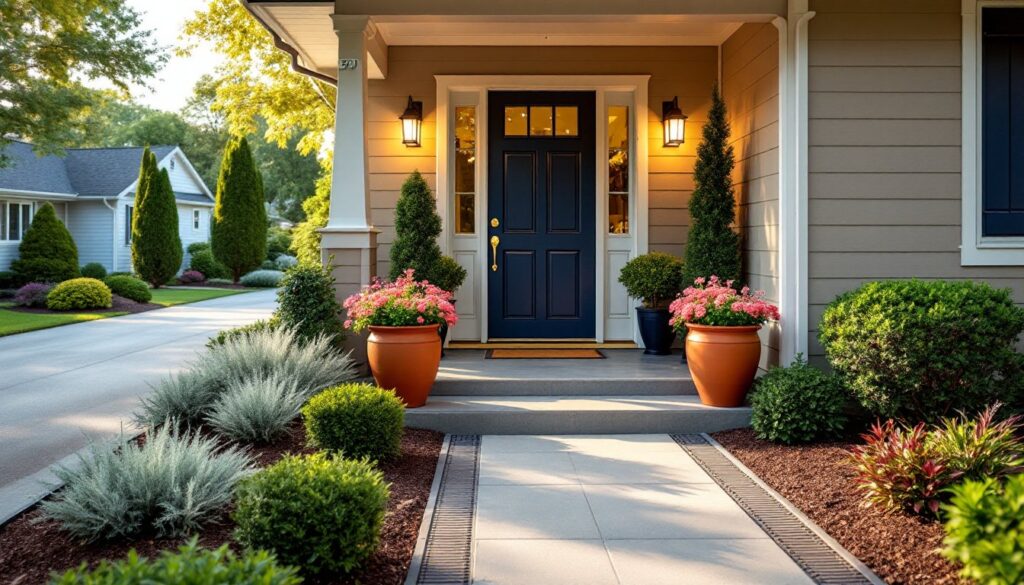
Your front door is the centerpiece of your curb appeal. It’s the place people’s eyes land, so don’t neglect it.
Paint or stain the door a color that complements your home’s exterior. Black, navy, forest green, and deep red are classics that read upscale without screaming. Avoid neon or highly trendy hues unless you’re prepared to repaint in a few years. Use exterior-grade paint (typically 100% acrylic latex) rated for your climate, and prime any bare wood or stained surfaces first. A solid coating usually needs two coats: allow 24 hours between them.
Replace or refresh hardware. New locksets, hinges, and a fresh knocker cost little but feel premium. Polished brass, matte black, and stainless steel are timeless finishes that resist weathering.
Add a new door if the existing one is warped, rotted, or permanently discolored. A solid or insulated prehung exterior door ($200–$600 depending on material and style) arrives ready to install in most standard jambs. Solid wood doors age beautifully: fiberglass mimics wood grain convincingly and resists weather better: steel offers durability and security.
Frame the entry properly. A fresh coat of paint on the door jamb and trim pulls everything together. Caulk gaps between trim and siding so water doesn’t seep in, use exterior-grade paintable caulk, not silicone.
Refresh Outdoor Lighting for Evening Impact
Curb appeal isn’t just about daytime appearance. Strategic outdoor lighting transforms your home at night and adds security.
Install uplighting on significant landscape features. Position a low-voltage LED light at the base of an attractive shrub, stone planter, or architectural feature so it casts light upward. This technique, called uplighting, creates drama and depth. Low-voltage LED landscape lighting kits (often 12-volt) cost $100–$300 for multiple fixtures and can be wired together with basic tools, no electrician needed for cosmetic installations.
Light the entryway clearly. A motion-sensor floodlight above the front door improves security and guides guests safely. Alternatively, pair matching sconces flanking the door (one on each side) for balanced, welcoming light. These ship with canless LED bulbs and don’t require rewiring old fixtures.
Use warm-colored LEDs (2700K–3000K). Cool white light looks institutional: warm white feels inviting. LED bulbs run 80% cooler than incandescent and last 25,000+ hours, so they’re cost-effective over time.
Run wiring along the house base or bury it shallowly (4–6 inches) under mulch or soil to hide cables. Check local codes before digging, utility lines can hide underground. If in doubt, run wiring above ground behind plants or along house trim, then paint it to match.
Create Definition With Defined Pathways and Borders
A clear path from the curb to your front door ties the whole front yard together and prevents foot traffic from trampling plantings.
Install a walkway or stepping stones. Concrete pavers (12″×12″ or 18″×18″), natural stone, or regular concrete all work. Lay pavers on a 1-inch bed of sand (after clearing soil and leveling the base). Space them so an average stride fits comfortably. A 4-foot-wide path accommodates two people side by side and feels generous.
If full replacement isn’t in the budget, paint existing concrete with concrete porch paint or apply a decorative concrete stain to refresh tired surfaces. Pressure wash first to remove dirt and mildew, then let dry fully (24–48 hours) before painting.
Define planting beds with edging. Metal or plastic edging keeps mulch in place and gives beds a finished look. Lay edging on the soil line, tap it in with a rubber mallet, and secure with landscape spikes (typically included) every 2–3 feet. Alternatively, hand-dig a 3-inch trench around bed perimeters to create a clean visual edge without buying edging materials.
Keep edges sharp and mulch fresh. A ragged, overgrown bed edge reads neglected. Trim back plants and refresh mulch annually in spring. This single maintenance task does more for curb appeal than you’d expect.
Maintain Clean Landscaping and Hardscaping
Even the best plants and hardscape can’t shine under a layer of neglect. Regular maintenance is the unsung hero of curb appeal.
Prune shrubs and perennials intentionally. Remove crossing branches, dead wood, and any growth that obscures your front door or blocks windows. Use sharp hand pruners for stems up to 1/2-inch thick and loppers (long-handled pruners) for thicker branches. Make cuts at a 45-degree angle just above a bud or side branch. Don’t just hack randomly: step back often to check balance.
Pressure wash your driveway, walkway, and front facade. A 2,500–3,000 PSI pressure washer (electric or gas) removes built-up grime, mold, and algae. Start at 25°F nozzle angle and stay about 2 feet away to avoid damaging surfaces. For siding, dial it back to 1,500 PSI or less to prevent gouging. Rent a unit for $50–$75 per day if you don’t own one, a clean facade is worth the effort.
Remove weeds and dead plants promptly. A single dead shrub or weedy bed undermines an otherwise tidy yard. Either repair it or replace it. Don’t let it linger.
Edge landscape beds and lawn. Use a sharp spade or an edger tool to create a crisp border between bed and grass. This takes 30 minutes and looks professional. Lawn mowers sometimes creep over borders, softening the line, regular edging restores definition.
Add Finishing Touches With Containers and Decor
Containers and small decor details add personality and warmth to an otherwise plain entrance.
Position planters flanking the front door or driveway entry. A matching pair feels intentional and balanced. Tall ceramic or glazed terracotta pots (16–24 inches) make a visual statement. Fill them with seasonal annuals, ivy and pink begonias in spring, marigolds and ornamental grass in summer, mums and ornamental cabbage in fall. Rotate plants seasonally to keep the look fresh without major investment.
Choose a house number sign that’s easy to read and fits your style. A clear, illuminated address number is practical, delivery drivers and emergency responders need it fast. Modern, traditional, or rustic designs are available: pick materials (metal, wood, ceramic) that complement your door and trim.
Add a welcoming wreath or door swag. Fresh or artificial, a simple wreath signals that the home is tended. Swap it seasonally (spring florals, summer greenery, fall leaves, winter evergreen).
Keep decor minimal. A landscaped front is the main event: overdoing planters, statues, and ornaments reads cluttered. Stick to one or two statement containers and a door wreath. Let the plants and clean lines do the talking. Following Gardenista’s design principles, restraint and intentionality beat visual noise every time.
Conclusion
Curb appeal doesn’t demand a contractor or a five-figure budget, it demands intention and maintenance. Fresh paint on a front door, seasonal plantings, clean edges, and thoughtful lighting together signal that your home is well-cared-for. Start with one or two projects that excite you, execute them well, and build from there. The payoff is immediate: every time you or a guest pulls up, your home feels inviting and maintained.