Table of Contents
ToggleNot everyone can wake up to an ocean view, but that doesn’t mean your bedroom can’t capture the calm, breezy essence of a coastal escape. Creating a beach-themed bedroom isn’t about stuffing it with kitschy anchors and fish netting, it’s about translating the natural beauty, soft light, and relaxing rhythms of seaside living into your personal retreat. Whether you’re a seasoned DIYer or just starting to explore decor projects, building a coastal bedroom is an achievable way to transform your sleep space into a sanctuary that feels like a permanent vacation. This guide walks you through practical, actionable coastal bedroom ideas that blend color, texture, materials, and lighting to deliver authentic seaside calm without the salt spray.
Key Takeaways
- A coastal beach bedroom starts with a calming color palette of soft whites, warm grays, and pale sand as neutrals, accented sparingly with muted blues and seafoam greens.
- Natural materials like distressed wood, linen textiles, and woven elements such as rattan and jute create authentic coastal bedroom ideas with genuine character and texture.
- Quality bedding and simple window treatments in linen or cotton blends with minimal layers deliver the relaxed, imperfect aesthetic that defines coastal design.
- Layered lighting with soft, warm sources like bedside lamps and dimmer switches mimics natural seascape ambiance and transforms the space into a tranquil retreat.
- Intentional decor accents like collected shells, driftwood pieces, and coastal artwork should feel personal and curated over time, not purchased as a themed set.
Choose A Calming Color Palette Inspired By The Ocean
The foundation of any coastal bedroom starts with color. Soft, muted tones borrowed from the beach create an instant sense of tranquility and are much more forgiving than bold accent walls.
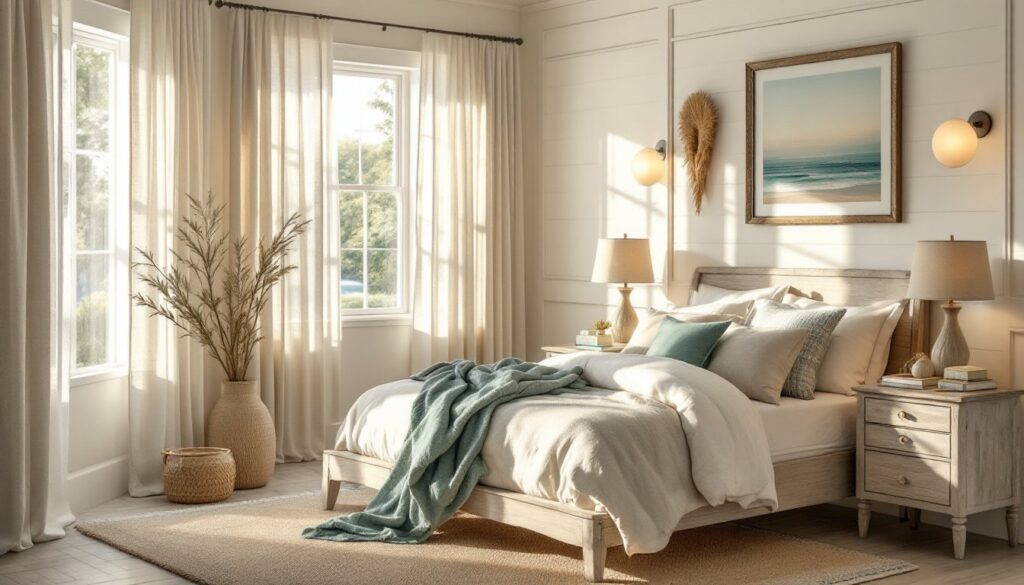
Start with neutral bases: soft whites, warm grays, pale sand, and cream work beautifully as wall colors. These reflect natural light and provide a clean backdrop for layering textures. If white feels too stark, consider warm whites with slight undertones of beige or gray, they feel less clinical and more inviting.
Add secondary colors sparingly. Pale blue, seafoam green, and soft sage mimic water and driftwood without overwhelming the space. Think muted rather than vibrant, imagine looking at the ocean on an overcast morning, not a Caribbean postcard. Use these in accents like throw pillows, curtains, or a single feature wall rather than painting all four walls.
Accent colors should whisper, not shout. Warm sandy tones, soft shell whites, and weathered gray-blues work as trim, doors, or decorative elements. Many coastal bedrooms use a 70-20-10 rule: 70% neutral base, 20% soft secondary color, and 10% accent. This keeps the room calming rather than decorative. The goal is a space that feels like a quiet morning at the beach, not a themed resort.
Incorporate Natural Materials And Textures
Coastal style thrives on raw, authentic materials that feel like they’ve weathered time and salt air. Texture is what makes a beach bedroom feel genuine rather than generic.
Wood Accents And Weathered Finishes
Wood is non-negotiable in coastal design. Reclaimed or distressed wood flooring, bed frames, or wall paneling instantly grounds a room in authenticity. If you’re installing new wood, consider engineered or solid hardwood in light to medium tones, white oak, ash, or pine work beautifully. For a DIY approach, you can distress new wood with sandpaper, stain, and strategic gouging to mimic age and weathering. Apply a matte or satin finish rather than gloss: coastal wood should look sun-bleached, not polished.
Shiplap or wainscoting adds classic coastal architecture without major construction. Tongue-and-groove paneling (typically ¾-inch thick boards) can be installed horizontally or vertically on accent walls. For a straightforward project, boards are fastened directly to studs with finish nails, then caulked, sanded, and painted white or left natural. Sunset Magazine’s beach home design guide covers modern approaches to bringing beachy vibes into your home with thoughtful material choices. Driftwood pieces, real or quality reproductions, work as floating shelf supports, mirror frames, or sculptural accents without requiring installation tools.
Textiles And Woven Elements
Layering textiles adds comfort and visual depth. Linen, cotton, jute, and sisal create that tactile, beachy feel. Area rugs in natural fiber (jute or sisal) define the bedroom floor, while layering throws, pillows, and blankets in linen or cotton adds softness without heaviness. These materials are also practical, they’re durable, easy to clean, and age beautifully.
Woven accents work throughout: wicker baskets for storage, rattan headboards, seagrass wall hangings, or macramé curtain tiebacks. These elements bring organic, handcrafted character. Home Bunch’s interior design inspiration showcases luxury home features including woven textures and natural materials that fit coastal aesthetics. If you’re installing a rattan headboard, it typically attaches to a standard bed frame with L-brackets and can be a satisfying DIY afternoon project requiring only a drill and screwdriver.
Select Beach-Themed Bedding And Window Treatments
Your bedding sets the tone for the entire room and is one of the easiest updates to make. Choose high-quality linen or cotton blends in whites, soft blues, grays, or sand tones. Linen wrinkles beautifully and improves with washing, that lived-in texture is quintessential coastal. Thread count matters less for coastal style than fiber quality: 300–400 thread count linen or 400–600 count cotton is perfectly adequate and feels natural rather than overly refined.
Layer your bed like you’re arranging driftwood: a flat sheet, fitted sheet, and a lightweight quilt or coverlet in complementary neutrals. Add throw pillows in varying textures, a striped linen pillow, a chunky knit pillow, a shell-textured accent. Avoid matching sets that look too coordinated: the charm of coastal design is intentional, relaxed imperfection.
Window treatments should be simple and airy. Linen curtains in white or natural cream filter light softly and move with breeze, adding to that seaside feeling. Roman shades in natural linen or cotton provide a clean, streamlined look and are straightforward to hang, most mount directly to the window frame or wall with brackets. Avoid heavy velvet or blackout shades: if you need light control, consider layering lightweight curtains with a simple shade underneath. Plantation shutters in white or weathered finishes also work well and have staying power in coastal style.
Add Coastal Artwork And Nautical Decor Accents
Artwork and decor should feel collected over time, not purchased as a beach-themed set. Original artwork, photography, or prints of coastal landscapes, shells, lighthouses, or abstracts in soft color palettes work beautifully. Black-and-white photographs of beaches, piers, or boats are timeless and sophisticated. Oversized canvas prints or framed photography create impact without clutter.
Decor accents should be intentional. Real shells collected from trips, a driftwood branch in a tall vase, a weathered wooden boat oar, or vintage nautical instruments (vintage compass, barometer, or astrolabe) add character and storytelling. A single well-chosen statement piece, like a large driftwood mirror or a coastal landscape painting, is more impactful than a shelf full of knickknacks.
Keep the hardware and fixtures in keeping with the style: matte black, oil-rubbed bronze, or brushed nickel work better than polished brass. Doorknobs, drawer pulls, and light fixtures should feel understated rather than decorative. Southern Living’s home design perspective emphasizes regional approaches to coastal style, with attention to porch living and outdoor transitions that complement interior spaces. Avoid beach-specific novelty items unless they genuinely resonate with you, your bedroom should feel like a retreat, not a souvenir shop.
Layer In Lighting That Mimics Natural Seascape Ambiance
Lighting is where DIYers often miss the mark. Harsh overhead fixtures kill coastal calm: instead, layer soft, warm light sources that mimic sunrise and sunset reflections on water.
Start with overhead fixtures: a flush-mount fixture or simple pendant in brushed nickel or matte black works well. Keep it understated, a frosted glass shade diffuses light evenly without drama. Bedside table lamps with linen shades in warm white tones are essential: aim for 40–60 watt equivalent LED bulbs (warm 2700K color temperature) for soft, amber light.
Add accent lighting: wall sconces flanking the bed provide functional and atmospheric light, simple to install if running wire to studs. A dimmer switch on main fixtures allows light to drop from daylight task lighting to evening ambiance with one movement, this is a game-changer and a straightforward electrical swap for anyone comfortable with basic wiring (if not, hire a licensed electrician).
Layered lighting means multiple fixtures on separate switches so you control intensity throughout the day and evening. String lights or fairy lights are tempting but can feel decorative rather than coastal: if you use them, opt for warm white, not cool white, and keep them subtle. The best coastal lighting feels invisible, you’re aware of the effect, not the fixtures themselves.