Table of Contents
ToggleA deck railing isn’t just a safety requirement, it’s one of the first things guests notice when they step outside. The right railing can transform your deck from functional to stunning, and composite railings have become the go-to choice for homeowners who want durability without the maintenance headache. Unlike traditional wood railings that demand constant staining and sealing, composite materials resist rot, fading, and splintering for 15+ years with minimal upkeep. Whether you’re building new or replacing an aging railing, 2026 offers more design flexibility than ever before. This guide walks through the best composite railing styles, color options, and installation tips to help you make an informed choice for your home.
Key Takeaways
- Composite deck railings eliminate the maintenance burden of wood—no staining, sealing, or splinter repairs needed over 15+ years of durability.
- Horizontal railing designs and metal-and-composite combinations are leading contemporary trends, offering clean aesthetics while meeting IRC code requirements for safety.
- Composite railing colors now range from warm whites to deep blacks; test samples against your home’s siding in natural light before deciding, as darker tones hide dirt while mid-tone grays offer the most versatility.
- Installation success depends on proper post placement, structural inspection of your deck, and familiarity with local building codes—many jurisdictions require permits even for homeowner installations.
- Annual maintenance is straightforward: rinse with mild soap and water, tighten fasteners yearly, and clean algae spots with a diluted vinegar solution using only soft brushes.
Why Composite Railings Are the Smart Choice for Homeowners
Composite materials, typically a blend of wood fibers, plastic, and binding agents, deliver benefits that solid wood simply can’t match. They don’t splinter, warp, or check when exposed to rain, UV rays, and temperature swings. No annual staining or sealing means you save time and money over the railing’s lifetime.
Durability is the headline, but there’s more. Composite railings meet or exceed code requirements (IRC Section 2407 sets minimum loadability at 200 pounds per linear foot for residential railings), and many systems include hidden aluminum frames that provide structural integrity without the visual bulk. You’ll also find options that accommodate cable, balusters, or panel infill, depending on your aesthetic preference. The upfront cost runs higher than pressure-treated wood, typically $40–$80 per linear foot installed, but the lack of maintenance and longer lifespan make the math work for most homeowners who plan to stay in their homes or value resale appeal.
Sleek Contemporary Railing Designs
Minimalist Horizontal Styles
Horizontal railings are the reigning design trend for modern decks. Thin, parallel rails (typically 2–3 inches apart vertically) run from post to post, creating clean sight lines and an uncluttered look. This style works especially well if your deck overlooks a garden or landscape you want to showcase.
Composite materials excel here because the rails resist sag over long spans, a real advantage over wood, which can bow under its own weight. Standard rail spacing is 4 inches (maximum gap to prevent a 4-inch sphere from passing through, per code), but many horizontal designs use narrower spacing for a bolder visual statement. Colors like dark gray, charcoal, or rich brown tend to feel more contemporary than the lighter tones. Expect to spend 10–15 hours on installation if you’re comfortable with fasteners, post holes, and basic carpentry.
Metal and Composite Combinations
Mixing aluminum frames, stainless steel accents, or powder-coated metal components with composite infill is one of the sharpest design moves available. The metal provides structural elegance, thin posts and sleek horizontal supports, while the composite fills the space with texture and warmth. Cable railings (stainless steel or coated aluminum wire under tension) paired with composite top and bottom rails are particularly popular for their minimal visual footprint.
These hybrid systems demand precision during layout and installation. Post locations must be exact, and alignment matters more than with all-composite designs. If you’re not confident with a level, a tape measure, and pilot holes, this is a good time to call a professional installer. The payoff is worth it: these railings photograph beautifully and add a custom, high-end feel to your deck.
Classic and Timeless Railing Aesthetics
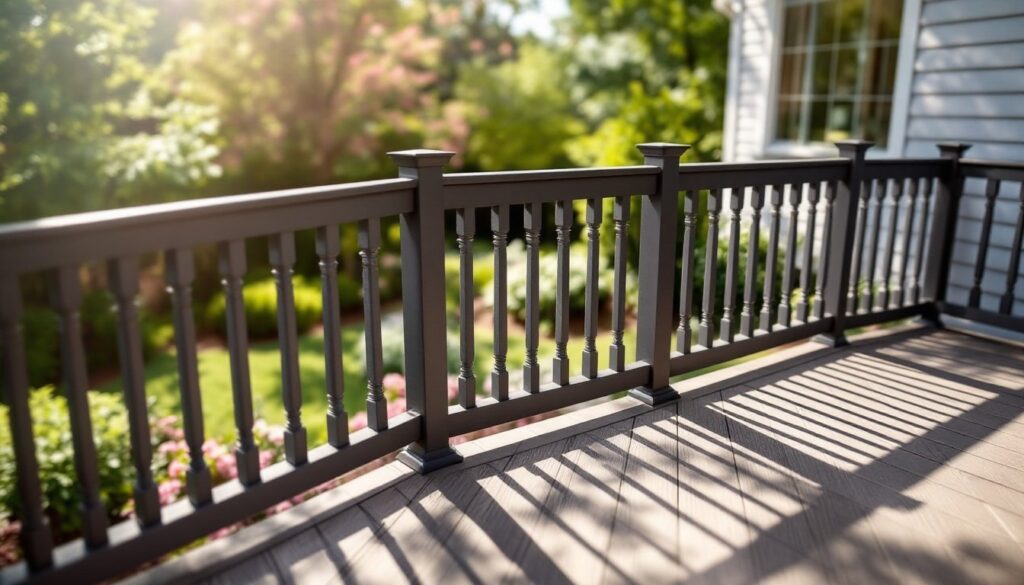
Not every homeowner wants a minimalist look. If your home has traditional architecture or sits in a neighborhood with period-appropriate homes, a classic composite railing with turned balusters, vertical spindles, or solid panels will feel more at home.
Composite balusters mimic wood spindles but won’t rot or require paint touch-ups. Spacing is the same 4-inch code requirement, so you’ll run 6 to 8 balusters between posts depending on post spacing. Traditional designs often include a bottom rail (just above the deck surface) and a top rail, creating a frame that feels established and grounded. Panels, solid composite sections that fill the railing cavity, are another classic choice, particularly if privacy is a goal. They work well on deck sides that face neighbors or busy streets.
Color matters here. Warm browns, tan, or weathered gray composite railings feel more traditional than blacks or charcoal. Many manufacturers offer finishes that mimic grain or weathering, adding authentic character without the maintenance burden of real wood.
Color and Finish Options That Complement Your Home
Composite railing colors have expanded dramatically. You’re no longer limited to basic brown or gray. Manufacturers now offer warm whites, deep blacks, warm charcoals, weathered silvers, and even custom color matching.
When selecting a color, pull samples and place them against your house siding, trim, and surrounding materials in natural light. What looks rich online may feel too dark on your deck, or too bright if it sits in full sun. Light colors show dirt and pollen more readily: darker colors hide debris but can absorb heat on very hot days (not a deal-breaker, but worth noting). Mid-tone grays and warm browns tend to be the safest, most versatile choices across different home styles.
Finishes vary too. Some composite railings have a smooth, contemporary sheen, while others carry a subtle wood grain or weathered texture. Textured surfaces can feel more authentic but may trap dust or pollen in grooves. Talk to the manufacturer about UV stability and color fade rates, quality composites hold color far better than budget options. Design ideas for composite decking can help you visualize how different styles and colors work together in a full outdoor space.
Installation and Maintenance Tips for Composite Railings
Installation depends on your deck’s framing and railing system design. Most composite railings bolt to posts that have been set into the deck structure, either attached to rim joists or sunk into footings, depending on local codes. You’ll need a post hole digger (or auger if you’re drilling down 3+ feet), lag bolts rated for your load, and a level to ensure posts are plumb. A helper makes the job easier, especially when holding a long rail steady while you’re fastening.
Before you buy materials, verify your local building code. Some jurisdictions require permits for railing work: others allow homeowner installation if you pass inspection. Height minimums (typically 36–42 inches from deck surface) and load requirements are enforced, so don’t eyeball these.
Prep is critical. Inspect the deck rim joist and posts for rot, composite railing is only as good as the structure it’s attached to. Replace any compromised wood before starting railing work. Mark post locations carefully and double-check spacing before drilling any holes.
Maintenance is refreshingly simple. Rinse the railing annually with a garden hose and mild soap: pressure washing on high pressure can damage the material. Inspect fasteners yearly and tighten any that have loosened. Check for debris in horizontal rails where water can pool. Unlike wood, you won’t need to sand, stain, or seal. Discolored spots from algae or mold can be cleaned with a 50/50 white vinegar and water mix and a soft brush, no harsh chemicals needed. Woodworking project tutorials and detailed building guides offer step-by-step installation walkthroughs if you’re planning a DIY install.
Final Thoughts
Composite deck railings offer homeowners a genuine return on investment. They look great, require minimal upkeep, and last for decades without the seasonal maintenance that wood demands. Whether you choose a sleek horizontal design, a hybrid metal-and-composite system, or a traditional style with balusters, composite delivers durability and design flexibility. Take time to evaluate color and finish options in your home’s setting, verify local codes before starting, and don’t rush the installation prep work. A railing built right today will frame your deck and home for years to come.