Table of Contents
ToggleA small concrete patio doesn’t have to feel like a gray, utilitarian afterthought. With some thoughtful design choices, it can become the most inviting spot in your yard, and without very costly. Whether you’re working with a tight footprint or a modest budget, concrete is forgiving, durable, and surprisingly versatile. The key is layering texture, color, and purpose into a space that feels intentional. This guide walks you through seven practical small concrete patio ideas, each designed to maximize visual impact and usability in a compact footprint. From stained finishes to mixed materials, you’ll find strategies that fit your style and skill level.
Key Takeaways
- Small concrete patio ideas like stained finishes, stamped patterns, and polished concrete can transform a plain slab into an inviting outdoor space at a fraction of replacement costs.
- Concrete stain and sealing is the most budget-friendly option, costing $0.50–$1.50 per square foot, with light stains reflecting heat and making tight patios feel airier.
- Stamped concrete mimics expensive materials like brick and stone without maintenance demands, though professional installation at $5–$15 per square foot ensures quality results and durability.
- Concrete pavers are the most DIY-friendly small patio solution, allowing modular layouts like herringbone that create visual interest while remaining manageable for homeowners.
- Strategic landscaping with container plants, raised beds, and climbing vines softens hard concrete edges and makes compact patios feel connected to the surrounding yard.
- Thoughtful furniture arrangement and vertical decor—such as wall-mounted planters and outdoor rugs—maximize usability while making small patios feel larger and more intentional.
Stained and Sealed Concrete for Color and Durability
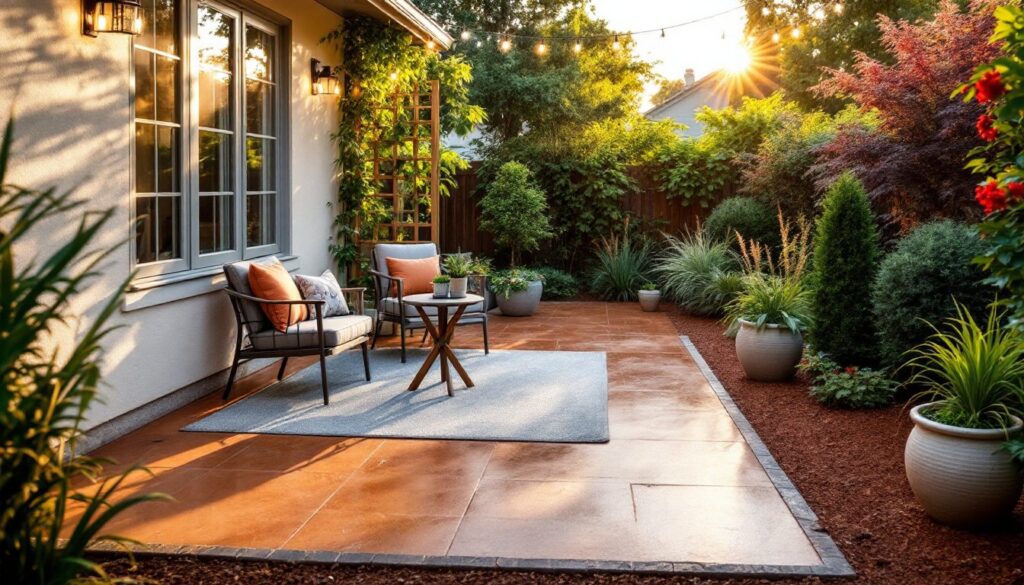
Concrete stain is one of the cheapest ways to add personality to a plain slab. Acid-based stains chemically react with the concrete to create earthy, variegated tones, think russet, terracotta, or charcoal. Water-based stains offer more color control and are easier to apply and clean up, though they may be less vibrant.
Before staining, the concrete must be clean and slightly porous. Pressure wash at 1500–2000 PSI to remove dirt, mildew, and sealers: let it dry for 2–3 days. Apply stain with a pump sprayer or roller, working in sections and maintaining a wet edge to avoid lap marks. One coat typically covers 200–400 square feet per gallon, depending on concrete porosity.
After staining, seal the surface with a concrete sealer (acrylic, polyurethane, or epoxy). Sealers protect against stains and UV fading and make cleanup easier. Reapply every 1–2 years on high-traffic patios. A stained and sealed patio costs roughly $0.50–$1.50 per square foot in materials, far less than replacing the concrete.
For small spaces, opt for one solid stain or a simple two-tone stripe. Too many colors compete for attention and make the space feel cramped. Light stains (cream, tan) reflect heat and make a tight patio feel airier.
Stamped Concrete Patterns and Textures
Stamped concrete mimics brick, stone, wood, or slate without the cost or maintenance of the real thing. Stamps are pressed into fresh concrete before it sets, creating repeating patterns that add texture and visual interest.
If your patio is already poured, resurfacing is an option: apply a 1–2 inch overlay of stampable concrete over the existing slab, then stamp while wet. New installations are cheaper: existing patios can be re-stamped, but the overlay adds $3–$10 per square foot.
Popular patterns for small spaces include running bond (brick-like), ashlar (random stone), and linear slate. Smaller stamp patterns create visual complexity without overwhelming a tight footprint. Color-hardener (broadcast onto wet concrete before stamping) adds richness and hides dust and blemishes.
Stamping requires skill and speed, the concrete must be at the right set time (firm but impressionable). This is worth hiring a professional for: mistakes are hard to hide. If you’re stamping yourself, practice timing on a test area and have a helper. Seal stamped concrete every 1–2 years: traffic and weather wear the sealer faster on textured surfaces.
Stamped patios cost $5–$15 per square foot (material and labor combined for new work). Overlays run $8–$18 per square foot.
Polished Concrete and Minimalist Aesthetics
Polished concrete strips away the rough surface and reveals aggregate (gravel embedded in the concrete), creating a smooth, sophisticated finish. It’s modern, low-maintenance, and works especially well in small patios where sleek aesthetics matter.
The process involves grinding the concrete with progressively finer diamond pads, usually 50 to 3000+ grit. High-grit finishes are glossy: medium grits are matte and slip-resistant. After polishing, apply a penetrating sealer to protect the exposed aggregate from staining.
If your concrete is already in decent shape (no major cracks or spalling), polishing costs $2–$8 per square foot. This is nearly always a job for professionals: the equipment is expensive and mistakes are permanent. Existing stains, cracks, or efflorescence (white chalky deposits) may need grinding-out or repair before polishing.
Polished patios pair beautifully with minimal furnishings and clean lines. The lack of pattern draws focus to any plants, outdoor art, or seating you add. Polished surfaces are slippery when wet, so avoid high-traffic polished walkways: reserve the technique for a small seating area. Pair it with a textured border or non-slip coating for safety.
This finish works best on new concrete or slabs in good condition. If your patio has significant damage, stamping or staining may be a more forgiving choice.
Concrete Pavers and Mixed Material Designs
Concrete pavers (also called segmental pavers) are pre-cast blocks laid over a gravel and sand base. They’re modular, easy to install, and you can replace individual pavers if one cracks. For a small patio, they’re one of the most DIY-friendly options.
When choosing pavers, consider size relative to your space. Large pavers (12×12 or bigger) make a small patio feel larger: tiny pavers can feel fussy. Thickness matters too: residential pavers are typically 60mm (2.4 inches) thick and rated for pedestrian traffic.
Layouts like running bond (offset rows) or herringbone add visual interest without costing more. Herringbone is the most labor-intensive pattern to install but looks striking in a compact space. Concrete pavers offer flexibility in design and durability that make them ideal for small-space patios.
Mixed material designs layer pavers with other materials, gravel, stone, or wood edging. A concrete paver base with a gravel border and timber or steel edging creates separation and visual hierarchy. Use a 4-inch base of compacted crushed stone, add 1 inch of concrete sand, and lay pavers level. Compact with a hand tamper or plate compactor as you go.
For a 100-square-foot patio, budget $200–$400 in materials (pavers, base, sand) and 2–3 days of labor if you DIY. Professional installation runs $8–$15 per square foot.
Landscaping and Greenery Integration
A small concrete patio benefits enormously from greenery. Plants soften hard edges, provide shade, and make the space feel connected to the yard. Strategic placement prevents the patio from feeling isolated or bare.
Consider planting beds or pots at the patio’s perimeter. Raised beds 18–24 inches high can define the patio edge and provide seating in a pinch. Use fast-growing vines or climbing plants on a trellis to create a green wall, which adds privacy and breaks up vertical plane without taking up ground space.
Container gardening is ideal for small patios. Large pots (20-30 inches deep) with perennials, ornamental grasses, or small shrubs anchor the space. Odd numbers and varied heights create visual interest. Group pots in odd clusters rather than lining them up, which feels stiff and formal.
Choose plants suited to your climate and sun exposure. Afternoon shade on a small patio in hot climates is valuable: use deciduous trees or tall shrubs to filter sunlight without blocking it entirely. Evergreens provide year-round structure but can feel heavy in a tiny space: balance with airy perennials or grasses.
Landscaping and outdoor living design often go hand-in-hand with hardscaping. Southern Living and similar outdoor design resources showcase integration of patios with gardens and regional plant choices. Plan drainage carefully: water should slope away from any patio structure or house foundation. A 1–2% slope (about 1/8 inch per foot) is sufficient.
Furniture and Decor Arrangement for Small Spaces
In a small patio, furniture placement makes or breaks usability. Every piece should earn its spot.
Choose scaled furniture: a 4-foot bistro table and two chairs take up less visual weight than a 6-foot dining set. Stools that tuck under a table, folding chairs, or benches with storage multiply function. Look for multi-purpose pieces, an ottoman that doubles as a side table, or a bench that seats two and stores cushions.
Arrange furniture to define zones. A small seating cluster with a side table and two chairs creates an intimate lounge. A dining spot and a lounge area, even 8 feet apart, signal different uses without requiring more space. Leave clear sightlines and a walking path: crowded furniture feels cramped.
Decor should be minimal but intentional. A potted plant, outdoor rug, and string lights do more than clutter. An outdoor rug anchors the seating area and defines the patio boundary. Lighting extends usability into evening: solar-powered stakes or a simple string light canopy add warmth without hardwiring.
Color ties the space together. Repeat the patio finish color (or accent color from stain or stamps) in cushions, planters, or a rug. Too many colors fragment a small space. Home improvement and decor inspiration often highlights how arrangement and thoughtful styling transform patios of any size.
Vertical decor, wall-mounted planters, a small water feature, or artwork, draws the eye up and makes the patio feel larger. A mirror or reflective surface can visually expand a tight corner.
Conclusion
A small concrete patio is an opportunity, not a limitation. Stained finishes, stamped patterns, mixed materials, and thoughtful landscaping transform a plain slab into a destination. Start with a clear vision, will this be a quiet seating nook, a dining spot, or flexible multipurpose space?, then choose finishes and furnishings that support that goal. The best small patio is the one you’ll actually use, so prioritize function alongside aesthetics. With planning and care, your compact outdoor space will become one of the most valued areas of your home.