Table of Contents
TogglePainting a boy’s bedroom is one of the quickest, and most impactful, DIY projects a parent can tackle. The right color sets the mood, reflects his personality, and can grow with him through the years. Whether your son is five or fifteen, choosing a paint scheme requires balancing durability, visual appeal, and practicality. Unlike a living room or kitchen, a kid’s bedroom gets heavy use: rough play, climbing on furniture, the occasional marker incident. You’ll want a finish that withstands that kind of wear while avoiding trendy colors that’ll feel dated in two years. This guide covers 2026 paint ideas that work for active boys, from bold statement walls to timeless schemes that adapt as his interests change.
Key Takeaways
- Boys bedroom paint ideas should balance durability and personality by choosing timeless colors like navy blue, forest green, or warm neutrals that won’t feel dated in a few years.
- Navy and deep blue palettes create a sophisticated, calming environment that works well with nearly any accent color while supporting focus and relaxation.
- Neutral foundations paired with bold accent walls provide flexibility for design changes as your son’s interests evolve without requiring costly repaints.
- Proper prep work, including wall priming with quality primers like Kilz or Benjamin Moore, is essential for colors like green and orange to avoid muddy or dingy appearances.
- Sport and hobby themes are best integrated through decor, posters, and removable wall decals rather than permanent paint, allowing the room to adapt as interests change.
- Professional painting techniques—including thin, even coats applied in a “W” pattern while maintaining a wet edge—ensure flawless results and can save 8-12 hours of DIY effort.
Bold And Vibrant Paint Colors For Active Boys
Navy And Deep Blue Palettes
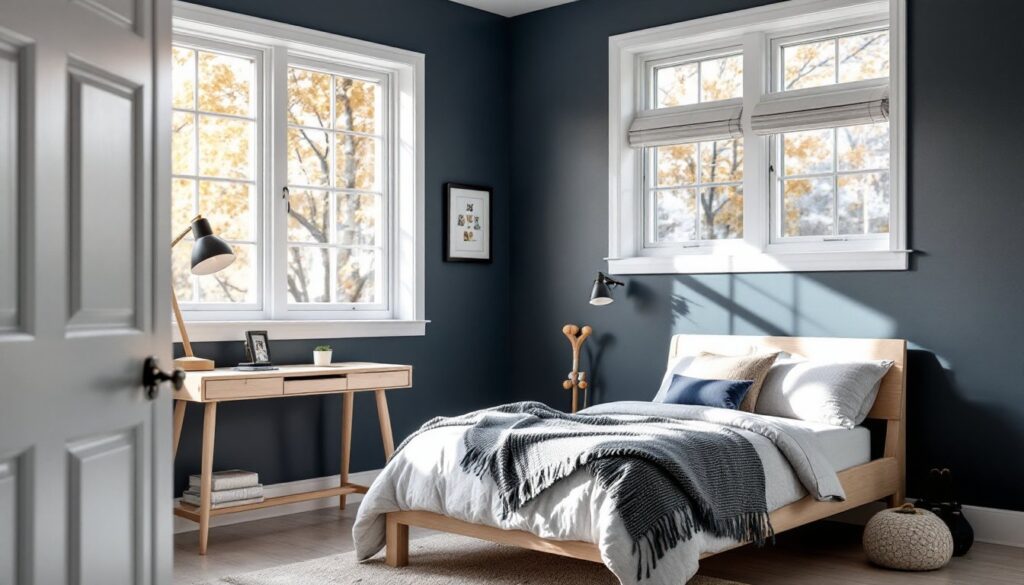
Navy blue remains one of the most versatile choices for a boy’s room. It’s sophisticated enough to age well but energetic enough to feel age-appropriate. Deep navy absorbs light, creating a cozy cocoon effect that can help younger kids wind down before bed. Paint the entire room in a deep navy (think Sherwin-Williams Naval or Benjamin Moore Hale Navy) and pair it with white trim and a lighter accent wall in soft gray or charcoal for dimension.
For rooms with strong natural light, navy works particularly well because it won’t feel cave-like. Conversely, if the room is naturally dim, consider a lighter blue instead, something like slate blue or dusty periwinkle, to keep the space from feeling gloomy. These cooler tones are scientifically associated with calm and focus, which works well if your son studies in his room.
The beauty of navy is that it plays well with nearly any accent color. Warm wood furniture, metallic accents, and even pops of orange or green complement it beautifully without clashing.
Energetic Greens And Warm Oranges
Green is having a major moment in interior design, and for good reason. A soft, muted green, not a cartoon character green, creates a natural, grounding feel without feeling immature. Sage green, forest green, or olive are excellent for rooms where you want calm + personality. These tones work especially well if your son enjoys sports, nature, or outdoors.
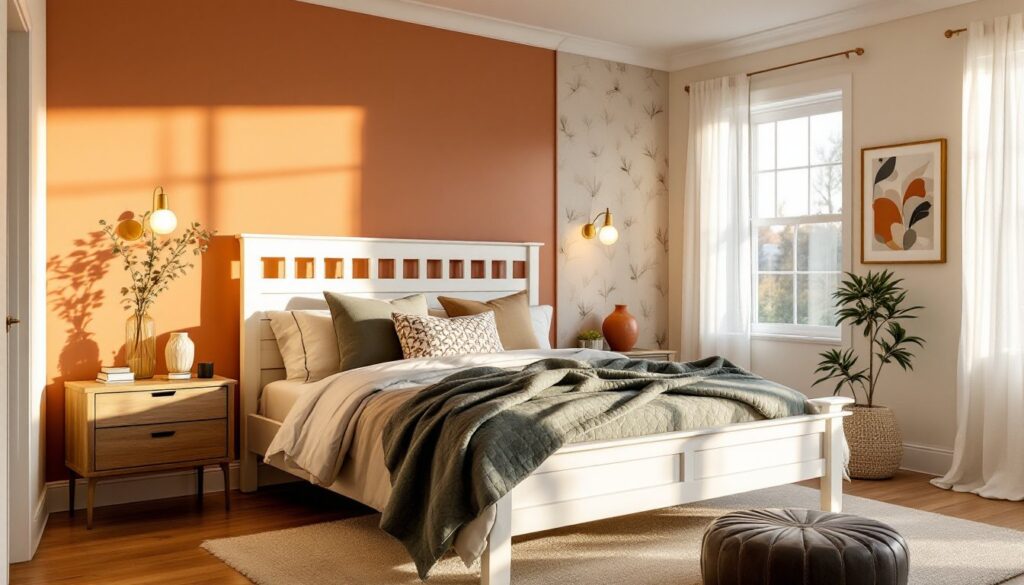
Warm oranges, particularly burnt orange or rust tones, bring energy without the chaos of neon. A burnt orange accent wall above the bed or along one wall creates a focal point that doesn’t overwhelm the space. Pair burnt orange with cream trim and light wood furniture to keep it balanced.
One practical note: both green and orange require good prep work. These colors have natural undertones that can look muddy or off-color if your walls aren’t primed correctly. Use a quality primer (Kilz or Benjamin Moore Advance Primer) to block stains and create a uniform base. A light stain or water mark under green can turn it sickly: under orange, it looks dingy.
Neutral Foundations With Accent Wall Drama
Sometimes a boy’s room benefits from restraint. Neutral walls, warm grays, warm whites, or soft taupe, provide a calm foundation that makes accent walls and furnishings pop. This approach gives you flexibility if his interests change: you’re not locked into a paint scheme that screams “dinosaurs” when he’d prefer rock climbing.
Choose a warm neutral for walls, Benjamin Moore Accessible Beige or Sherwin-Williams Urbane Bronze work across many lighting conditions. These tones don’t feel sterile because they contain subtle warmth. Then, select one accent wall. This could be the wall behind his bed, a wall with a window, or even the closet door. A bold accent wall (deep teal, forest green, or charcoal) against neutral surroundings feels intentional and design-forward.
Another option: paint three walls in a warm neutral and one wall in a deeper, richer shade of that same neutral family. For example, three walls in greige (gray-beige) and one wall in warm taupe creates visual interest without jarring color contrast. This strategy works beautifully in rooms with multiple windows or lots of natural light, where strong contrast can feel choppy.
The practical advantage here is durability. Neutral walls hide dust, scuffs, and the inevitable marker/crayon incidents better than pastels. If maintenance is a concern, this is your best bet. Paint with a satin or semi-gloss finish rather than flat: it’s far more wipeable and forgiving.
Timeless Paint Schemes That Grow With Your Child
Your son’s age matters, but his paint scheme shouldn’t become embarrassing in five years. Timeless color palettes lean on classic combinations: navy + white, charcoal + light gray, forest green + cream. These duos have grounded well-designed spaces for decades and won’t scream “2024” in 2030.
A two-tone paint scheme works well here. Paint the lower half of walls in a light neutral and the upper half in a slightly deeper shade or complementary color. This horizontal division uses a chair rail or painter’s tape as the dividing line, typically about 36 to 48 inches from the floor. It’s practical (the lower section takes more scuffs and wear) and visually interesting without being fussy.
Avoid novelty colors tied to specific franchises, trends, or fads. A bright primary-color scheme might feel perfect now, but will feel dated when he’s twelve. If your son loves a specific theme, space, dinosaurs, sports, integrate it through posters, bedding, and decals rather than paint. Paint stays: decals come down and can be replaced.
Classic color combinations that age well include slate gray + white, forest green + warm white, or soft taupe + light charcoal. These palettes work from age six through teen years and can transition into a young adult’s space with minimal changes. Quality matters too: invest in a premium interior latex paint (Sherwin-Williams Duration or Benjamin Moore Aura) that won’t need refreshing in three years.
Sport And Hobby-Themed Bedroom Paint Concepts
If your son is passionate about soccer, skateboarding, gaming, or another hobby, his room should reflect that without limiting future design changes. The smart approach is a neutral or calm paint base with thematic accents through decor.
For a sports-focused room, paint walls in a warm gray or soft charcoal and use the bed wall as a statement area. You could paint that wall in his team colors (if keeping it broad, forest green for a soccer player rather than a specific team’s neon shade) or add a mural. A mural is a commitment, so be sure he’s genuinely passionate. If paint murals feel too permanent, removable wall decals and posters let him change themes as interests shift.
Another tactic: accent wall with a horizontal color block. Paint the top two-thirds of one wall in a neutral, then the bottom third in a bolder shade related to his hobby, perhaps a game controller silhouette in dark blue, or a basketball court color. This keeps the room from feeling immature while honoring his interests.
The real key to hobby-themed rooms is keeping the base paint scheme neutral enough that when interests change (and they will), a fresh set of posters and decals revive the space without repainting. Paint costs money and time: swapping decor doesn’t. If he’s genuinely into a niche hobby, consider consulting design-focused home decor resources that specialize in personalized room transformations for clues on how other parents have handled similar projects.
Professional Painting Tips For Flawless Results
Painting a bedroom requires proper prep, the right tools, and attention to detail. Don’t skip surface preparation, it’s where most DIY paint jobs fail.
Before you paint:
-
Clear and protect the room. Move furniture to the center and cover it with plastic sheeting. Remove outlet covers and light switch plates. Lay down canvas drop cloths (not plastic: they’re slippery and won’t stay put). Painter’s tape along trim, ceiling lines, and windows keeps edges crisp.
-
Prep the walls. Fill holes and dents with spackling compound: sand smooth once dry. Wipe walls with a damp sponge to remove dust, pet hair, and grime. Allow to dry completely before priming. If there are water stains, marker, or crayon marks, apply a stain-blocking primer first.
-
Prime the walls. This step matters, especially if covering a dark color or stained surface. A quality primer creates an even base and improves final paint color accuracy. Most rooms need one coat: heavily stained walls may need two.
Painting technique:
-
Use a 2-3 inch angled brush for edges and trim, a roller with a 3/8-inch nap for smooth drywall. Cheap brushes shed bristles into wet paint, invest in decent tools.
-
Apply paint in thin, even coats rather than one thick coat. Most colors need two coats for full coverage. Allow proper drying time between coats per the can’s instructions.
-
Paint in a “W” pattern with your roller, then fill in the W without lifting the roller. This distributes paint evenly and reduces visible roller marks.
-
Maintain a wet edge. Don’t let the paint dry between sections, or you’ll see lap marks where wet paint overlaps dried paint.
Safety and practical tips:
- Wear safety glasses, nitrile gloves, and a dust mask during prep work and priming.
- Open windows and ensure adequate ventilation. Paint fumes dissipate faster in a well-ventilated space.
- Use low-VOC or zero-VOC paint if your son has respiratory sensitivity. Modern paints have minimal odor, but ventilation is still essential.
- Paint early in the day so the room dries before bedtime.
- If hiring a professional, get written estimates from 2-3 contractors and verify they’re insured and licensed in your jurisdiction.
Most homeowners painting a single bedroom spend 8-12 hours including prep and cleanup. If you’re uncomfortable with the project or pressed for time, hiring a professional painter typically runs $1,000–$2,500 depending on room size and complexity. That investment ensures crisp edges, even coverage, and no do-overs. For a DIYer, quality paint supplies and proper technique yield professional results. Resources like budget-friendly room makeover guides walk through step-by-step painting tutorials if you need visual reference. Alternatively, boys’ bedroom design inspiration showcases finished rooms and color combinations to spark ideas before you commit to paint.