Table of Contents
ToggleAn entryway mirror does more than reflect faces before a person heads out the door, it’s a functional design workhorse that can completely transform how a space feels. A well-placed or thoughtfully styled mirror bounces natural light around a dim hallway, makes a cramped entry feel wider, and sets the tone for the rest of a home. Whether someone’s working with a modest apartment foyer or a sprawling two-story entrance, the right mirror strategy brings both practical and aesthetic payoff. This guide breaks down the smartest entryway mirror ideas, from bold statement pieces to budget-friendly solutions, so any homeowner or DIY enthusiast can pull off a polished, purposeful look.
Key Takeaways
- Entryway mirror ideas can make small spaces feel larger and brighter by strategically bouncing light and reflecting visual depth throughout the foyer.
- A well-placed mirror at eye level (5-6 feet high) creates the illusion of spaciousness while avoiding disorienting effects from opposite-facing mirrors.
- Statement mirrors with bold frames—oversized rounds, arched designs, or sunburst styles—transform an entry into a focal point that sets the tone for your entire home.
- Gallery wall arrangements using odd numbers of mirrors with mixed frames and finishes deliver dynamic visual interest without overwhelming the space.
- Functional storage solutions like mirrored medicine cabinets and mirror-backed shelving maximize limited entryway square footage by combining reflection and organization.
- Budget-friendly entryway mirror options from thrift stores, big-box retailers, or DIY frame projects deliver professional-looking results for $20–$100 or less.
Why Mirrors Matter in Your Entryway
Create the Illusion of Spaciousness
A strategically placed mirror is one of the cheapest and most effective ways to make a tight entryway feel roomier. The reflection bounces visual depth into the space, tricking the eye into perceiving more square footage than actually exists. This works especially well when a mirror faces an open sightline, across from a window, down a hallway, or opposite a feature wall.
Placement is key. A large mirror mounted at roughly eye level (around 5 to 6 feet from the floor) works best for most people. If the entryway has high ceilings, a floor-to-ceiling option or a tall, vertical mirror amplifies the sense of height. Horizontal mirrors above a console table feel grounded and work in wider entries. Avoid placing mirrors directly opposite each other, as this creates an endless tunnel effect that can feel disorienting.
Boost Natural Light and Brightness
Mirrors act as light multipliers. A mirror positioned to catch sunlight from a nearby window and bounce it deeper into a dark hallway instantly brightens the space without adding a watt of artificial lighting. This is particularly useful in entries that lack windows or only get direct light at certain times of day.
Pair a mirror with a bright paint color, soft whites, warm creams, or light grays, and the reflective effect compounds. Even in poorly lit entryways, a good mirror combined with a single overhead fixture or wall sconce creates the impression of natural brightness. This matters because the entry is the first visual experience visitors and residents have: a bright, welcoming space sets a positive tone.
Statement Mirror Designs for Bold Impact
A statement mirror becomes an instant focal point. Rather than blending into the background, it commands attention and anchors the entryway’s design language. This works when a homeowner wants the mirror to be the hero of the space, not just a functional afterthought.
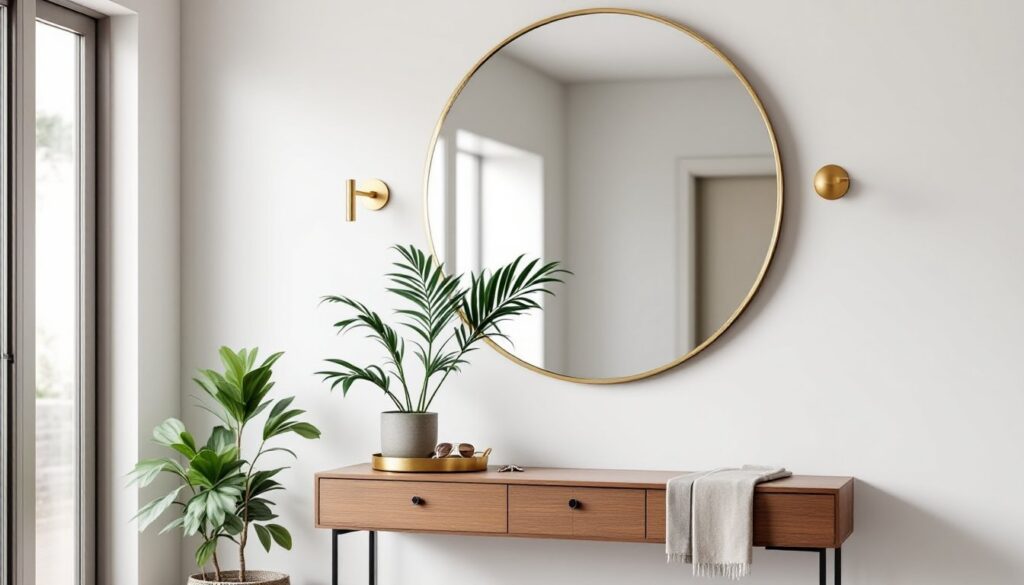
Oversized round mirrors are a popular choice, they soften angular entryways, introduce a curve that contrasts with straight walls, and feel modern without being trendy. A 36-inch to 48-inch diameter round mirror in a simple black, brushed gold, or natural wood frame works in most aesthetic contexts. Installation is straightforward: find the studs, use appropriate wall anchors if studs don’t align, and hang at eye level.
Arched or Gothic-inspired mirrors bring architectural interest to plain walls. These work especially well above narrow console tables or in entryways with higher ceilings. The arched top draws the eye upward, making the entry feel taller.
Sunburst and starburst designs add vintage or bohemian flair. These feature multiple rays or spokes radiating from a central mirror, creating visual interest. They work well in narrow foyers where wall space is limited but ceilings are tall.
Decorative frames matter as much as the mirror itself. A carved wood frame, industrial metal frame, or sleek minimalist border completely changes the vibe. Sources like Decoist modern home decor showcase how frame style elevates the entire entry. Choose a frame that echoes other details in the home, if a space leans contemporary, a thin metal or simple wood frame fits. If it’s more traditional, an ornate or beveled frame reads richer.
For installation, use a stud finder to locate wall studs and use lag bolts or heavy-duty anchors rated for the mirror’s weight. Most statement mirrors weigh 30 to 60 pounds, so anchors that support at least that much are non-negotiable. Wear safety glasses when drilling.
Gallery Wall Mirror Arrangements
A gallery wall featuring multiple mirrors creates visual interest and works brilliantly in entryways where a single large mirror might feel overwhelming. The mix of mirror shapes, sizes, and frames allows for creative expression while maintaining balance.
Start with one large anchor mirror, this could be a 24-inch to 36-inch rectangular or round mirror, positioned roughly at eye level or slightly higher. Then layer in smaller mirrors around it: 12-inch to 18-inch rounds, 10-inch by 14-inch rectangles, or even small 6-inch square mirrors. Odd numbers (3, 5, 7 mirrors) feel more dynamic than even numbers.
Before hanging, lay the arrangement on the floor using kraft paper templates cut to match each mirror’s size. This lets a homeowner experiment without puncturing the wall. Once satisfied with spacing, mark the wall lightly with a pencil and drill. Space mirrors 6 to 12 inches apart depending on the desired visual density. Tighter spacing feels curated and gallery-like: looser spacing feels more casual and airy.
Frame variety is the secret to a compelling gallery wall. Mix finishes, brass, black, natural wood, whitewashed, but keep a unifying thread: perhaps all frames are metal, or all are wood-toned. Consistency in material creates cohesion even with different shapes and sizes.
Maintenance is simple: dust with a microfiber cloth and wipe occasionally with a glass cleaner. Avoid abrasive pads that scratch the reflective surface.
Functional Storage Mirrors and Built-Ins
For homeowners with limited entryway space, a mirror combined with storage or shelving solves two problems at once. A mirrored medicine cabinet, a mirror-fronted console, or a wall-mounted mirror with integrated shelves maximizes function without eating up floor real estate.
Mirrored medicine cabinets come in various sizes (most common: 16 inches to 30 inches wide) and mount directly to studs. They’re ideal for storing keys, sunglasses, and small accessories while reflecting light. Installation requires anchoring to studs with appropriate screws: most cabinets come with a hanging template to guide placement.
Floating shelves beneath a mirror add display and storage. A mirror mounted 12 to 18 inches above a shelf creates a practical vanity-like setup perfect for a console or ledge. Use shelves that can support weight, solid wood, plywood with veneer, or metal shelves rated for at least 25 pounds. Anchor shelves into studs if possible, or use heavy-duty shelf brackets and wall anchors.
Custom mirror-backing on built-in cabinetry is an advanced move but worthwhile in entries with more complex layouts. A cabinetry shop can build a custom frame, and a glass supplier can cut 3/16-inch to 1/4-inch mirror to fit. This approach works best for new construction or major renovations. Consult a designer or carpenter to ensure proper support and finish details.
Mirror-backed furniture is also available off-the-shelf: dressers, bar cabinets, and etagere shelving units with mirrored backing add function while amplifying the sense of space. These are easier installs than custom builds but require similar wall anchoring if mounted.
Budget-Friendly Mirror Solutions
A tight budget doesn’t mean skipping the mirror upgrade. Affordable options abound, and many deliver real impact without the price tag of designer pieces.
Inexpensive framed mirrors from big-box retailers and online sellers range from $20 to $100 for decent sizes and finishes. Look for frames in styles that match the home’s vibe, minimalist black frames, simple wood, or gold-toned plastic that reads like metal from a distance. A 36-inch round or 30-inch by 40-inch rectangular mirror in a basic frame is often under $75 and looks far more expensive when installed properly.
Frameless mirrors with polished edges are cheaper than framed options and work in contemporary settings. These can be hung directly to wall studs with mirror clips or heavy-duty adhesive strips. A 3/16-inch thick frameless mirror is standard and durable. Adhesive strips work for smaller mirrors (under 20 pounds): for larger pieces, clips provide safer, more permanent mounting.
Vintage mirrors from thrift stores or estate sales often cost less than new and bring character. Reframe an old mirror using a DIY frame kit or have a frame shop do it for under $50. This approach yields truly one-of-a-kind pieces that reflect personal style.
DIY mirror frames can be built from 1×4 or 1×6 lumber, hardwood trim, or PVC molding. A simple frame for a 24-inch to 30-inch mirror costs $15 to $30 in materials. Cut frame pieces to size (miter the corners for a professional look, or use pocket holes), glue and brad-nail them together, sand, and finish with paint or stain. Slip the mirror into a groove routed along the inner edge, or use mirror adhesive. Resources like HGTV design inspiration showcase DIY frame projects that prove a handmade frame often outshines store-bought in charm and fit.
Paint-and-rehang strategy: If a mirror already exists in the entryway, a fresh coat of paint on the frame, or even on the wall surrounding it, breathes new life into it for nearly nothing. Metallic or bold wall colors behind a simple mirror frame transform the whole look.